

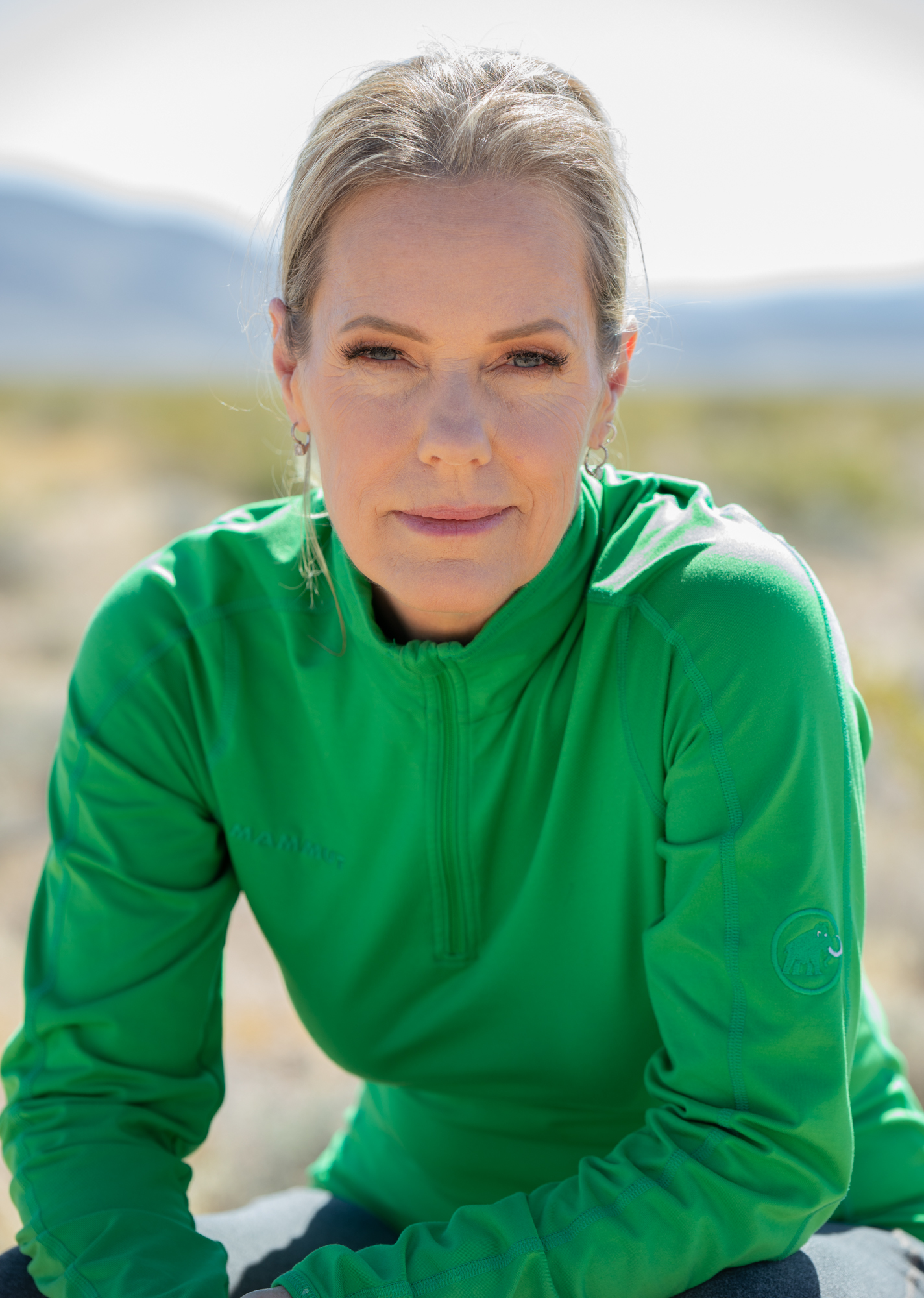

Climbing Mountains, Facing Grief, and Saying YES to Life with Dianette Wells
What happens when life knocks you down harder than any summit ever could? You get back up—and climb again. In this powerful episode of The Midlife Makeover Show, I sit down with elite mountaineer, adventure racer, and author Dianette Wells, who shares how she turned pain into purpose after the tragic loss of her son, Johnny.
Dianette isn’t just one of fewer than 500 people in the world to climb the Seven Summits—including Mount Everest—she’s also a midlife warrior who has competed in over 100 extreme races across deserts, jungles, and mountains. But her most meaningful journey wasn’t one of altitude, but attitude.
If you’ve ever felt frozen by fear, grief, or self-doubt, this episode is your permission slip to live boldly, love deeply, and go after your own personal Everest—whatever that may be.
What You’ll Learn in This Episode
⛰️ How Dianette climbed all Seven Summits, including Everest
⛰️ What grief taught her after the loss of her son
⛰️ The surprising way adventure healed her emotional pain
⛰️ How to tell the difference between fear and intuition
⛰️ Why midlife is the perfect time to reinvent yourself
⛰️ Practical tips for finding purpose after loss
⛰️ How to get “unstuck” by taking one small step

From Malibu Housewife to Mountaineer
Believe it or not, Dianette started her journey as a self-proclaimed “anorexic Malibu housewife” who could barely run around the block. A spontaneous girls’ trip to climb Mount Whitney in 1998 changed everything. One bold yes turned into a life of ultramarathons, adventure races, and global expeditions.
She didn’t just find strength—she found herself.

Grief Was Her Greatest Climb
In 2015, Dianette’s world came crashing down after losing her son Johnny, a fellow adventurer and youngest person to climb the Seven Summits by age 17. The physical pain of grief was so intense, she couldn’t walk around the block. But with time, self-coaching, and her deep love for the outdoors, she found healing through movement—and meaning in momentum.
Her story reminds us that grief and greatness can coexist.
How to Push Through Fear
From freezing on icy cliffs to second-guessing herself on live interviews, Dianette has had many moments of doubt. But what’s changed over the years is how she talks to herself.
“Now I say, ‘You know you want to do this. You can do this,’” she shared. “The way we speak to ourselves matters.”
Whether you’re afraid of public speaking, relationships, or walking into a grocery store post-trauma, fear is normal—but it doesn’t have to run the show.

Midlife as a New Beginning
Dianette’s message to midlife women is crystal clear:
“This is your time. You’re free. The kids are gone. You don’t need anyone’s permission to live your best life.”
Whether you want to hike Half Dome, sign up for a 5K, or finally take that art class, it’s time to stop waiting for someday. There’s no such day on the calendar. Do it now. Be bold. Try new things. Live joyfully. Live out loud.
Finding Purpose in the Pain
Dianette’s memoir, Another Step Up the Mountain, is a raw and riveting reflection on grief, motherhood, and the power of resilience. Through it all, she proves that even the deepest sorrow can become a catalyst for strength.
And as she says, “We don’t just exist—we’re here to live, to grow, and to have fun while we’re at it.”
👉 Connect with Dianette
💻 Website
READ THE FULL TRANSCRIPT HERE
Meet Dianette Wells, an elite mountaineer and adventure racer
Wendy Valentine: Welcome back to the Midlife Makeover show, where reinvention is real and the second half of life is the best half of life. Today’s guest is living proof that resilience, courage, and sheer determination can move mountains literally. Meet Dianette Wells, an elite mountaineer, adventure racer, and author who has tackled some of the most extreme challenges on Earth. She’s one of fewer than 500 people in the world to conquer the Seven Summits, including Mount Everest. And she’s competed in over a hundred grueling races. From desert crossings to ultramarathons to biking across America. She’s basically badass. you may have even seen her on Amazon Prime’s World’s Toughest race or 48 Hours Eco Challenge Borneo. But Dianette’s most powerful climb wasn’t to a mountaintop. It was through the depths of grief after the tragic loss of her son Johnny, a fellow adventurer. In her raw and riveting memoir, Another Step up the Mountain, she shares how she transformed heartbreak into healing and turned pain into purpose. Today, we’ll talk about finding strength and sorrow, redefining what’s possible at midlife, and discovering your own Everest, no matter what you’re facing.
Please welcome Dianette Wells to the show. Well, welcome. I. D. Wells. Usually, I always have to ask how to pronounce
Please welcome Dianette Wells to. To the show.
Dianette Wells: It’s DNA. Actually, I was gonna ask you.
Wendy Valentine: I was like. I was like, right, right. When I hit record, I was like, dang it. Usually, I always have to ask how to pronounce the last name, and name’s easy. D. Yes. D. Wells. See, the. The Wells was easy. You’re. You’re my first DNT ever in my life.
Dianette Wells: I’ve never heard of another one.
Wendy Valentine: Well, welcome. It’s great to have you. So I have to tell you, I. The first time when, I got your. Your guest nomination for the show from Angela, and I was reading your bio, and I was like, dang. I was like, this chick is amazing. I was like, how did she do all that? And I thought I was cool because I could drive an RV across the country. No, that’s nothing. But then when I got to the part about your son, and I thought, wow, like, again, like, how do you. How do you even get through that? I mean, it’s one thing to climb Mount Everest, but to climb that grief had to been just crazy. So.
Was dealing with the death of Johnny, um, 100%.
So tell us a little bit about that. and your experience with. Probably, I’m going to guess your largest Mount Everest was. Was dealing with the. The death of Johnny, 100%.
Dianette Wells: And as someone in the very beginning said, you can’t climb over this you can’t go around it, you have to go through it. and, you know, grief, no matter when it happens, mine had, you know, Johnny’s accident happened just as I was becoming an empty nester. So, yeah, grief is different for every single person and takes its own time and, and yeah, every scenario is different and it’s, it’s just something you learn to live with and it’s, you know, it doesn’t stop life. Life keeps going on and you just have to learn to move ahead with this.
Wendy Valentine: Yeah. When did you become this wild mountaineer and was this early on?
Dianette Wells: my youngest was, I think in kindergarten. She was in preschool. I think she was three, Johnny was eight and my oldest was nine or 10. And I climbed Mount Whitney. It was back in 1998, so a long time ago. Climbed Mount Whitney with 10 of my friends, most of them Malibu housewives like I was. And I couldn’t even run around the block really. At the time. I didn’t know the difference between a road bike, a mountain bike. But I had driven past Whitney so many times in my life and I always wanted to climb it. And then to have 10 girlfriends, I’ll say yes. Let’s do it. Let’s do, just. It was one of the best trips I’ve ever done. And that’s how it all started was just this little, you know, one day climb of Whitney with a bunch of crazy women.
Wendy Valentine: And then what about before that? Had you ever done anything like marathons or anything like that?
Dianette Wells: I was a cheerleader. No, I was all into cheerleading. I did it in high school and college and that was my thing. I, I mean, literally I could not run around the block, nor did I have any desire to do such a thing. all of my shoes were flat. Cheerleading shoes. And yeah, so no, it was not in my, you know, not on my horizon.
Wendy Valentine: And have you always been courageous like that?
Dianette Wells: I don’t think so. I mean, I have so many fears in life. I mean, I’ve always been afraid of heights. interesting. Yeah, that’s the funniest part. and I really thought I could never. When I had that little inkling of, I want to climb the seven Summits, I thought, oh, but I can’t do Everest because I’m afraid of heights. And then I read a book and this man who wrote the book described the loadsey face, which was the part I was most afraid of. And he described it in such a way. I finished that book and I thought, oh, I’m going to Climb Everest. I can do this now. Now that someone has explained what it looks like, I can do this. And there you go.
Wendy Valentine: Wow. Silly question, but I’ve always kind of wondered this because, like, sometimes I’ll watch. I’ll see videos where people are climbing, but there. Are you alone? Are you with a team?
Dianette Wells: you can be alone if you. If you like and go do it. So I’ve always climbed, with alpine ascents, so a group. and even for summit day, I had my own Sherpa with me. Even though my group was kind of spread out along the ropes, I still had, my Sherpa Chuang right there with me the whole way. So you’re alone is in your tent at basecamp, then you get some alone time. But otherwise you’re sharing a tent with someone. you’re sharing a room in a tea house with someone a lot of times, so not a lot of alone time.
Wendy Valentine: And this is someone that’s, I would think, is experience then, that knows that has climbed before.
Dianette Wells: yeah, on Everest, I will. I will say alpine ascents is pretty good at checking people’s backgrounds and because people lie all the time about their experience. I mean, I had an instance on Denali where the guy lied on his resume and didn’t even know how to put his harness on. I mean, he could easily have killed all of us and almost did. but yeah, no, alpine ascent is really good on verifying people’s backgrounds. And so. And also the difference on Everest is you’re not tied to anyone. So, if someone you’re climbing with, you know, falls, they’re usually attached to a rope, but they’re not going to take you out as well, because you aren’t physically tied to them. You might be clipped in rope, but, you know, him falling is not going to affect me. M. Falling.
Sign: I look at everyday Life as kind of an adventure
Wendy Valentine: And had you, I mean, did you have to do training for all, like the mountain climbing and all of that?
Dianette Wells: Oh, yeah. so for Whitney, I was always my. My very first climb. I was always at the gym. I was just a big gym rat. And I would hike in Malibu all the time. but then I did my first adventure race. and that is when I started really training. I mean, eight hours a day, six days a week. I wore myself down to nothing and then built myself back up after that year. I had such a good base, and I thought, you know, this is not a balanced way to live life, especially as a mom with three young kids. And so I really backed off. But, I look at everyday Life as kind of an adventure. And I’m always trying to train a little bit here and there, whether it’s at a gym or on a bike. But no matter what I’m doing, I always have training in the back of my head because there’s always some adventure that’s going to come up.
Wendy Valentine: Yeah, I love what you said. I actually have this quote in front of me. It’s. You had said it in the video that’s on your website. And you said not only is life meant for the living, but that we should live it out loud and joyously for whatever amount of time we have on this earth, which I just love.
Dianette Wells: Absolutely.
Wendy Valentine: It makes you like. It’s. It’s. So. I always say the simplest teachings are the most profound. And that is so simple and so true because I. I’ve always thought, like, we get this tiny, tiny bit of time here on this earth. Why are we wasting it? You know, why are we not enjoying everything that. That there is to offer? And the heck with the fears, okay, whatever. Scared of heights. Let’s go for it anyways. Like, why not? And we don’t know, you know, right? We don’t know how. How much, like, how old was Johnny when he passed?
Dianette Wells: 23.
Wendy Valentine: Oh, so. So, like, yeah, like, he didn’t even have the luxury to make it to midlife, right? Like, my ex husband died at 26. He was 26 years old. And I always think. And every time, every. I always think about him. Like, if I’m going, if I’m thinking about doing something or I get scared, I’m like, oh, God, what are they gonna say? Or what are they gonna do? Oh, what if this happens? And I always, like, hear his voice say, you’re like, you’re living. Why wouldn’t you do this? Right? Like, why wouldn’t you say that or whatever? Right? Like, why not? So does. Does. Does Johnny speak to you now in your adventures?
Dianette Wells: I feel and hear Johnny when I’m out doing something on a climb or a race course. and I did literally hear his voice during, Eco challenge, Fiji. That’s on Amazon. It was wacky. And we had a little back and forth. that’s in the book, what he said to me. But, yeah, I mean, we are here. We don’t know how long we’re going to be here. And all this, you know, daily dread and worry and the stuff that keeps us up at night, you know what? Everybody has that. And. And every night I wake up stressed or worried about something, and now I just tell myself, oh, in the morning, you’re not going to feel this way. Because in the morning I wake up like that movie Gone with the Wind. It’s a new day, and I can make the most of this day. And I really try to. and I think we’re here to have fun. We’re here to learn lessons, I believe. But we’re also here to have a good time. And when people say, oh, I’ll do that someday, or I’ll do this someday, it’s like, no, there’s no such day as someday. Do it now. Book it now. Sign up for something now. Do it. Doesn’t matter whether you can do it or not. Sign up for it because you might be able to do it.
Wendy Valentine: Yeah. And you figure it out, right? I mean, literally putting one step, you know, in front of the other, like just one step at a time. What does it.
Just saying yes and doing it changed the course of your life
Laozu said, a journey of a thousand miles begins with a single step. Right. And you just having. Okay, making that decision. I’m going to climb Mount Whitney. I’m going to do it. And figuring out, like, okay, I guess I better get in some shape here. We’ll do this thing.
Dianette Wells: We were so ridiculous. And this was before. Now I’m going to really age myself. this before really, the Internet. So, you know, I didn’t know. None of us knew a thing. We had little ideas, but I think we took everything but the kitchen sink and our backpacks for the day. And it was just looking back how silly it was, but yet it was so profound. I mean, that one climb, which. Yeah, who knew if. If I could even do it, but just saying yes and doing it changed the course of my entire life. Yeah.
Wendy Valentine: What do you think? If you had not done all of that, where would your life be?
Dianette Wells: Oh, I would be. Oh, I don’t know if I’d still be alive. I was an anorexic Malibu housewife. You know, m wouldn’t be too thin, too rich, too blah, blah, blah, and caring what the neighbors thought. And yeah, I. That wasn’t for me. I wanted to play outside, and that’s where I was happiest. and thankfully, I mean, I had the best group of friends. I still am friends with, with them, these women in Malibu. And a lot of them would hike with me and stand, ah, up, paddle board with me and all these fun things. I really was lucky in the group of women that I was able to surround myself with. I mean, always up for adventures. you know, just saying yes to the craziest Things and, and that helps as women when we have our tribe of like minded crazy people.
Wendy Valentine: Took the words out of my mouth. I was just gonna say that. Yeah. And I’m sure you’ve gotten more in your tribe now.
Dianette Wells: Oh yeah. And, and it’s funny because now I’ll go do an ultra, in a foreign country always with racing the planet because it’s just the best, organization for those 155 miles. But you go and you see kind of the same people over and over again. So I know women and some great men from all over the planet who show up for these races and it’s just fun. There’s a camaraderie there that sometimes is hard to find in life.
Wendy Valentine: Yeah, exactly.
How do you feel that in being outdoors or being on these adventures, how it helps
How do you feel that in being outdoors or being on these adventures, how it helps you emotionally and spiritually?
Dianette Wells: so I don’t go to church every Sunday. I was raised Catholic. but like heaven and, and God for me and, and being able to, you know, all of that stuff. And the meditation happens when I’m hiking or riding a bike or doing anything over a sustained amount of time and I get into that flow state that is my meditation. That is, where I talk problems through with myself and figure things out that, you know, maybe I’m having trouble with, but, but that’s where it happens for me.
Wendy Valentine: I’ve always thought that too. Like, and I love hiking. And there was, I don’t remember where I was at, but maybe it was at, oh, Yosemite, Half Dome. I did High Calf Dome. Proud of myself for that one. I get nervous just replaying it in my mind, but I can remember walking up that. Pretty much like walking up a wall. Right. And you, you can’t think like you, you couldn’t think it. You, you can’t think about what you’re gonna make for dinner. You can’t think about how your hair looks or what so and so said to you yesterday because you’re so busy concentrating and watching your feet and watching your hands and yes, it’s like meditation. It’s like a walking meditation. And that’s why, like, I, I totally agree with you. But like when you’re, when you’re out hiking, no matter if it’s an easy hike or a difficult hike, it’s just very meditative and it’s just taking in the fresh air and the trees and the birds and the bugs and you know, everything. It’s just. I love it, I love it, I love it. I haven’t done, I mean, Half Dome is probably the scariest thing I’ve done.
Dianette Wells: Yeah, I haven’t done that. I guess you need permits now. yeah, anything that scares you a little bit and gets you outside, I think is a good thing.
Wendy Valentine: Well, I have to tell you. So they had, it’s like they do the lottery there with the Half Dome. And I went with my oldest son and my youngest son. We did Yosemite. And so we had put our names in, you know, in the lottery to see if we would be able to climb Half Dome. I’ll admit, I went to bed that night. I m was like, I, hope to God, we got up in the morning, you know, like four something in the morning, and we’re getting our bags ready and we’re like, well, we’re just gonna get ready to hike no matter what. And my son’s phone dings and he’s like, we’re in. We got the lottery. And I was like, that is like the one lottery I don’t want to win. I was like, God dang it. But, but we did. And, and I think we hiked. I think I hike about 12 to 15 miles before you even get to subdome. And I hit a wall. I’ve never done this in my life before. I don’t know, I love to see if you’ve, you’ve done this before. But I was going up Sub Dome and it just like I am looking up at the top of Half Dome. I’m like, holy moly. And there was a helicopter flying because they were looking for someone that had just freaking fallen off and died. And I was like, what am I doing? I’m like, oh my God. I’m like, what did these kids talk me into doing? You know? I was like, okay. And then, my mind started going. My mind took over and I froze. And the boys were walking ahead and they realized we’re like, well, we’ve been talking to mom. She’s not responding, which is unusual. And so they turn, they’re like, they come back, they’re like, are you, are you okay? And I was like, I could not talk, I could not speak. And I was like, I’m. I can’t, I can’t. They’re like, what? I’m like, I can’t, can’t do it. They’re like, what do you mean you can’t, you can’t do it? I was like, I can’t, I can’t do that. I can’t go. Nope. Nope. And all I kept thinking about just like the Worst, you know? And then I felt so bad for them because they were like, what do we do? Do we leave our mom behind because we want to go? Do we go back? Do we turn around? And then they literally, they’re, they come up and they’re like, well, if it’s all right with you, we’re gonna go, we’re gonna go ahead and we’re gonna climb it and why don’t you just sit here and chill? And, and then, and then I was like, I can’t have them going. And then I’ll be wondering how they’re doing. I was like, fine, I’ll go. And I was like, zoom M. And I did it. But anyways, it’s, it’s amazing how fear will take over.
You’ve had moments where you feel frozen on a mountain
So have you had any moments like that? And how did you break through them?
Dianette Wells: I’ve had all of those moments. you know, it depends. It used to be negative talk. If, if I hit that wall and I wasn’t going to go further, I would be not very nice to myself. I’d say, get your fat ass up right now and start walking. And now I’m gentle like, oh, come on, you know you want to do this. Let’s go do this. You can do this. Come. So the voice, how I speak to myself has changed. I was on a mountain in, I think it was Switzerland. Oh, yeah, it was Switzerland. We were climbing up this thing and I got very icy, very steep. And, I had that, that frozen moment where literally you can’t move your arms or legs. You’re frozen. And I said, I want to go down now. And the guide was trying to get me to keep going and I said, no, I want to go down now. And we went down and I felt very good about that decision. and so, when those happen now, depending on where I am, it’s usually on a very steep, very icy slope is where that will happen. If, I don’t have my ice axe and crampons. You know, I know that it’s my body telling me or my brain or my heart, something telling me it’s time to turn around. And I do. I was climbing the matterhorn. I was 45 minutes from the summit and I had that frozen moment and I said to the guide there, I said, you know, I want to turn around. And he was beside himself. And I said, I’m not feeling it. And a 13 year old girl, Julie, never forget her name, marched was, you know, going up past me. She said, what’s wrong? And I just, you Know I’m not feeling it. And she had this confused look on her face. But I trust that voice now, and I really feel that, you know, maybe that’s what keeps me alive. So m. It depends. If it’s something where I’m tired and, you know, I’m running an ultramarathon, I’m just tired. I don’t want to go on, then it’s okay. You do the checklist. Eat something, drink something, have some salt, Sit for a minute. Okay, time to get up and go. Because we’re not going to sit out in the middle of the desert all day. Let’s go. So those things happen for different reasons. So depending on where it is, I either feel it’s saving my life or I’m just going to take a two minute break.
Wendy Valentine: Yeah. Yeah. It makes you think, like, no matter if it’s climbing mountains or it’s in a relationship, whatever, but the difference between listening to that inner voice, your intuition, and listening to the fear and, like, how do you know which one is really speaking? Right.
Dianette Wells: Yeah. Look at the situation. And if it’s something you can do something about, review your options and then do something.
Wendy Valentine: Yeah.
Dianette Wells: You know, to sit in that same place of fear day after day and month after month and make no changes or decisions to move yourself forward, whether it’s up or down, that doesn’t do us any good. And so make a decision. And if it’s the wrong decision, you can always make another decision. It’s, you know, nothing really is so set in stone that we can’t alter our choices.
Wendy Valentine: Yeah, exactly.
After Johnny passed away, did you take a break from adventuring and mountain climbing
After Johnny passed away, did you take a break from adventuring and mountain climbing?
Dianette Wells: so I was signed up to do what’s called the Triple Crown, which is Everest, Lotsi, and Nuptse. I was going to do them in three days. try to get this record. The following spring, the spring of 2016, I had moved to Park City, was training, and then this happened. And after his accident, I could barely walk around the block. I mean, it was physically so difficult. And I was wondering, I’m in such good shape. How can I not walk around the block? Like, my body just. I couldn’t do it. and so I canceled that climb. My daughters would never have forgiven me. I canceled that climb. And I would just. I had two dogs at the time, so I would take them on walks, and it was excruciating. And I was. I was hunched over and walking like an old woman. And I would tell myself every now and again, you know, stand up straight You’re Johnny Strange’s mother. Like, not be slouched over, like, the. Stand up. So I tell myself to stand up straight and, and walk. And then on one of those walks, it hit me. I, I need something because I can’t continue on like this. And, I got in touch with the race director of, racing the Planet, and, you know, practically begged her for a spot for her next, race, which was in Sri Lanka. And she said, we have a spot for you. Just come. And I did. I mean, I hadn’t run for two minutes before that. And I finished this race. and, you know, I had all the signs from Johnny that I asked for, which was incredible. this runner kind of took me under his wing. I don’t know why, because he just. He could have finished the race so much faster. And funny enough, his name was John. Like, okay, yeah, there’s a sign.
Wendy Valentine: Yeah, yeah.
Dianette Wells: And so, you know, it ended up being a great thing, and it was a great first step in helping me, like, regain who and what I was. Which, you know, I was an athlete. but it. It took a while, you know, in year two was harder than year one, but at least I had sports again to fall back on and to kind of get me out of that hole.
Wendy Valentine: Yeah, I know. And greetings. you know, the experts say, and even I would say, too, it’s. It’s different for everyone. And. And I kind of got to that point, like, especially after my brother died, you know, I went into a massive depression and I almost got, like, just so tired of just laying around and just sitting there with my thoughts and the memories and the flashbacks and everything. And it was. It was starting to take action again. That actually healed me the most. Just getting back into just like in what you said in the. In your movie, you know, or in the. In the video, that it’s living again. And, you have to get back to that eventually. And sometimes you have to force yourself or sign up for something or whatever the case is. Right.
Dianette Wells: Yeah, we. We can’t just exist. We need to live, and we need to live with joy and purpose and, you know, signing up for something. Say it’s a 5K. Well, now you have purpose and, you know, at least you need to be walking. so, yeah, living with purpose and joy is, Is a great thing.
Being bold is different for everyone, right? And being. I had Lee Burgess on the show recently
Wendy Valentine: Yeah. We were talking before we hit record about. I was telling you how I live here in Portugal, and you’re like, oh, my gosh, I wish I was that brave. And I was, like, talking about. I was like, Wish I was as brave as you and. But being brave is different for everyone, right? And being. I had, Lee Burgess on the show not too long ago. She’s the author of Be Bold Today. And we were talking about that, like, well, what is bold? You know, like in bold is something different for everyone in different stages in our lives. Because, you know, after my brother died, I was like, to be bold was to get out of bed, like, whoo, I did it. I brushed my teeth, you know, yay. And then to be bold today for me is to get on a TV show or to talk about my book or whatever. Right? Like, it’s always changing and evolving. But what, what helps you to really make that first step on something? What is like, like, okay, I’m doing this.
Dianette Wells: Okay, so this podcast, for instance, or now that I’ve written a book and now I have to do podcast appearances and I’m so, this is not my, you know, ball game. And it’s, you know what, you’re going to do this. You signed up for this, you’re going to do this and just have fun with it. You may come off as a complete fool or say 100 wrong things, but you have to do it. You have to try it. You have to do it. And, you know, at the very least, I met someone new and, you know, what a great thing. but yeah, every. That’s why I say, you know, everybody has their Everest. Whether it’s their Everest of the day or it’s, you know, a multi month or year Everest, for all of those Everests. For people, it’s one small step and, and if you can’t figure something out, write it down. Because a lot of times if we put all of our fears and worries on paper, they, it, it takes away the sharpness of it and we’re able to see things better and, and maybe figure things out better.
Wendy Valentine: Yeah, you can get a different perspective and it’s, it detaches you from it. I actually put a reel on Instagram today about how I journal and journaling was, is very, I would say was and is very healing for me because I can just get all of that out on paper. Let my soul just pour onto the page and then I’m like, out of me. Like, yay, done. You know, not to say it’s done, but it’s a different. You’re just more detached from it. So I love that. Do you journal?
Dianette Wells: So, when I was very young, probably middle school age, I kept a diary. And I don’t know if My twin brother found it or something. But from that moment on, very little. When I’ve been on mountains. Yes. And that helped with the book, but I don’t keep a diary because I’m. I’m just always afraid someone would find it. I do keep gratitude journal. But, yeah, the diary thing, I. I don’t. But when I. When my head is spinning with a bunch of thoughts, I will put them down on a to do list. And that just frees up my brain, and then I’m able to continue on with either sleep or whatever I’m doing in the day. So, yeah, getting stuff out of my head and on paper, which I’m sure is the same with journaling, but I, again, fear I’m too afraid to write it down. But that’s.
Wendy Valentine: It’s so funny. You’re, like, reading my mind today. But, that’s actually what I’m going to show. I want to show you my journal. So this. Let me see on the screen.
Dianette Wells: Oh, wow. That’s impressive.
Wendy Valentine: So what you do is actually you. I’ll write one page, and then you turn it upside down and you write over what you just wrote. So you literally cannot read one word.
Dianette Wells: That’s fabulous.
Wendy Valentine: I know. I call it soul scribbling, but it is. So, And you still. You still get that same feeling? As a matter of fact, when I. When I’m writing back over my words, I feel even more, It’s like I have this shift that happens where I’m just like. Yeah, Like, I really let it. If I have to say something bad or whatever, you know, or something like, well, that. That’s really corny, but I never filtered. I don’t worry about grammar. I just. And it’s just like, ah. And I just close it, and then I’m done.
Dianette Wells: Like, I’ve never seen anyone do that before. Did you make that up?
Wendy Valentine: I did. I was like. Because I had the same thing. Like, I mean, I was. I was alone for a while, you know, but then the same thing when I kids and, you know, and I’m like, oh, God, what if I write that and someone reads that? I was like, you know, I mean, some people have diaries or journals on their computer. I’m like, oh, my God, there’d be no way. I will never do that. But here’s. Here’s another little, journal secret. So for years, actually, what I did do is total opposite. This is crazy. So I would journal. I wouldn’t.
Do journal. For everyone. Keep them in random places. You figure out what works for you
I mean, I might name names, but no one, like, where you would know who. Who the heck it is or anything like that. And then when I would complete a journal, I would leave it at an airport, like, all. Like, all over the world, different airports. And I would. I would leave a note at. On the first page to whoever found it, and I let them know, hey, you can read it, you can share it. I don’t really care. This is yours. And my hope was that, like, whatever I was to. Going. Going through in my life at the time, I was always going through something, that it would help them, that it would just find, like, the journal would find the right person who needed that message.
Dianette Wells: I don’t know what to say to that, but I love it. For everyone. Do journal. Keep them in random places. I. I love that.
Wendy Valentine: Yeah, I know. It’s like one or the other. If you want to totally disguise it, then fine. Yeah, so those are a couple of good journaling suggestions, but. Right. You kind of find again, like, with the healing, you. You figure out what works for you. Did you.
Besides Johnny, did you have any other events in your life that were challenging
Besides Johnny, did you have any other events in your life that were really challenging for you to go through?
Dianette Wells: Oh, sure. My divorce was. Was brutal and awful and, you know, like, what, 50, 60% of us go through it and, you know, yeah, it’s just another thing that we have to deal with in life. And, you know, again, I think we’re here to learn lessons and get stronger and. And, yeah, it, you know, helped make me strong. my dad leaving when I was little. I mean, that was profound because you’re a little kid. Your dad goes to work one day and doesn’t come back. It’s like, oh, what do we do now? And watching my mom, you know, navigate all that and. And, you know, raise twins by herself, and this was in the 70s, where now it was frowned upon to be the single mom in the neighborhood. And I didn’t realize how much my mom was kind of left out of things until I was much older. And, you know, my mom was the mom who had a job. She was a nurse. And so she wasn’t the PTA mom with all the other moms. And. And I just, you know, only as an adult do I. Do I realize, or did I realize how much she did for us and how hard and almost impossible it had to have been for her back then. But she did it. She was tough.
Wendy Valentine: Yeah, and that’s hard too, right? Like, I. I have something even recently with me where. What. What do they call it? Ambiguous grief, I believe is the term. It’s basically a grieving for Someone that is still here. You know, it’s different than grieving for Johnny or me grieving for Jason or Brian. Right. But it’s. It’s grieving for someone or something that is still here. So, like, grieving for that relationship or, you know, grieve. Grieving for that dad that was never there. Me grieving for my mom, like, all. So it’s. It’s a, But it’s all grief. It’s still like this. Not that you. Not. Not that it’s a cookie cutter process, but it’s the same type of process of the whole grief that you have to go through.
Dianette Wells: We are.
Wendy Valentine: Yeah. Losing a career, losing a house, or, like, I think about speaking of Malibu. Think of all the people that lost those houses. Like, there’s still a, There’s still grief around that was a home. And, and, and. And then it’s okay to grieve. It’s okay to, like, take some time. And I didn’t take time when my husband had died. And then when my brother died, I was like, God, dang it, I am gonna grieve this time because I deserve it. And it’s okay because we’re, you know, normally it’s like, all right, pull up your bootstraps, get back at it. You know, we don’t have time to grieve. Like, suck it up, wipe your tears. I’m like, no, I don’t want to. I’m gonna ball my eyes out this.
Dianette Wells: Time one way or another. So it’s good to give yourself whatever it is you need. And everybody grieves differently, so, you know, and it honors them instead of just brushing it under the rug and, you know, and just marching through it, you know, it honors them, too, that we grieve. I mean, I still get sad over dogs I’ve lost. so you better. It makes us part of who we are today. And I don’t think anyone gets out of this life without grieving something.
Wendy Valentine: So I’ve said. I know. I just said that the other day, too. I was like, well, that’s one thing we know. That’s a fact. You will experience loss in life, which.
Dianette Wells: Means you loved something or someone a lot in life.
Wendy Valentine: Exactly. Yeah.
How do you deal with anxiety after someone dies? How do you relax
What’s your, what’s your next quote, unquote Everest. What’s an Everest you’re dealing with right now?
Dianette Wells: the Everest I’m dealing with right now is,
Wendy Valentine: Hm.
Dianette Wells: Dishes, laundry. Now, last week I was, trying to climb mountain Bonogos with a bunch of friends. There’s way too much Snow. so we turned around so that I’ll go back and do that again. and what do I have? I have Whitney coming up in, in October a little ways off, but I’ll train for that. And, and just some fun little. And some in studio live things which, you know, I’ve only been doing podcasts so far, which I’m, I’m feeling pretty good about. But you know, to go sit there in a studio, I’m. I’m terrified. And that, the universe keeps doing that. If I am really afraid of something, the universe just throws it at me like, okay, now deal with it. Figure this out and deal with it. So I’m remaining positive and like, okay, let’s see what happens.
Wendy Valentine: How do you, how do you stay calm? How do you calm your, your body? Because sometimes, like, people will have such strong fears that they’re just like, like they cannot hand. How do you, how do you push past that? Much different than like pushing past the wall at like Mount Everest, but going on twitch. How do you literally like push past that so your body calms down?
Dianette Wells: I just do it. so I used to get after Johnny died because I had never had anxiety before. and I just kind of, I couldn’t relate to it because I’d never had it. And after Johnny died, I would go to the grocery store and again, happy that I left the house. Small wins every day. and then I’d get there and I couldn’t get out of the car. And sometimes in the beginning I would just say, I can’t do this, and I turn around and go home. But if you really need dog food, you need dog food. So I’d say, okay, you have 10 minutes for this little meltdown or whatever it is you’re doing right now. You have 10 minutes. And at the 10 minute mark, just shut off your brain, turn off the ignition, get out of the car. And I would literally turn my brain off until I walked in the grocery store, which my happy place, and be like, okay, I. I’m in the grocery store. It’s all good now. So maybe, it’s a little bit of that. It’s just, you know, emotions and, and you go through the emotions enough that your body can just do it on, on automatic. And then all of a sudden you’re present in there and okay, it’s not as bad as I was, you know, making it out to be, and it’s okay and going to do fine.
Wendy Valentine: Yeah, I think you learn to just coach yourself through things, right? Like you be, you Become your own best friend, as I say, and just speak to yourself and like, girl, like, I, I have to do that all the time. Like, come on, let’s do it. You know, like, it’s going to be okay. And you’ll have bad days, bad moments. That’s all part of it. It’s okay.
Dianette Wells: I mean, every day we’re great. How would we know it’s a great day? you know, if you have a bad day here or there, then you go, oh, wow, this is a great day. Because X, Y and Z. And so, you know, with light comes dark, with good comes bad. And it’s, it’s one knowing the difference and then striving for the good.
Wendy Valentine: Yeah. It’s the dichotomy of life, right?
Dianette Wells: Yeah.
Wendy Valentine: But you wouldn’t know light if you didn’t know dark.
Dianette Wells: So true. And then, you know, like right now most of my friends are empty nesters and it’s a lot of, oh God, this is awful. What do we do? What do we do? And it’s like, no, this time, you can have fun now. You don’t have to be home to make dinner, you know, every night at 7pm and try to figure that out. It’s, it’s. You can do whatever you want. And if you want to eat dinner at 6pm or 10pm, good for you. Do it. I mean, this is now a whole new level of freedom that we haven’t got to have in, in decades. So yeah, flip it around and look at the positives of what you now have. Even though, yeah, the kids are gone. It’s sad, but yeah, the kids are gone.
Wendy Valentine: That was me too. I was like, okay, bye, see you later. Mom’s got stuff to do.
Dianette Wells: and they’re so shocked when they call us and they want to do something and like, well, sweetheart, I have plans. Like, hey, you’re not sitting home waiting for me to call you. Come on.
Wendy Valentine: Exactly.
You say life is an adventure and I totally agree. Do what makes you happy
Well, I think you had said earlier that life is an adventure and I totally agree. I mean, I think of life as like, like a buffet, right? And you go and you can sample whatever you want. If you like it, you’re like, cool, I’m gonna eat that again. I’m gonna do that again. Whatever. If you don’t like it now, you know. Right. But that’s the thing. Like with Empty Nest, it’s like the perfect time to try some cool stuff and see what you like.
Dianette Wells: Absolutely. And Dad’s saying, I had it written on a chalkboard in my home for years. Life is a buffet. Eat up.
Wendy Valentine: Oh, shut up. Oh, my gosh. That is too funny. yeah. And you know what? Whoever, you know, listening out there, it doesn’t have to be literally Mount Everest. It can be signing up for a painting class. It can be taking a walk. You know, anything that gets you outside of your comfort zone. So, yeah, because you evolve, right? You change as you experience more of those things. I mean, you’ve. I. I would imagine have changed drastically from that. From that. You know, the mom in Malibu just taking a walk with the girls.
Dianette Wells: You know, I feel more in touch with her, because I am still taking a walk with the girls, and trying new things. I did sign up for a knitting class when I lived in Park City. I made it. I don’t even think I made it through the first class. So then I had a private with the teacher, and I needed her to say in person to me, this is not for you. Which she said after about five minutes. And I thought, well, it’s just as important to know what is not meant for us as it is to know what is. And hiking and. And being outdoors, that is who I am and what I am. And I like that lane. And I’ll. I’ll stick in that lane. I’ll stay in that lane. and yeah, if other skill sets come down the road, great. But I know it makes me happy. And it’s. It’s that woman. Now, the difference between when I was a Malibu mom, hiking is. And now is I used to care back then what people thought, you know, people would. People would say, you know, not very nice things sometimes. not my closest friends, but women and gossip, of course. I can’t believe she leaves her kids to do this. Or, you know, oh, you’re making a mess of the jungle as you race through it. Like, not knowing that, you know, Mark Burnett had a team just do at the end of the race, sweep through the jungle to look for any tiny bit of trash or anything left behind. But, So it’s ignoring the judgment of others and knowing what makes you happy. And if you don’t know what makes you happy, you know, there’s time to figure it out. Figure it out, but forget the judgment. Do what makes you happy.
Wendy Valentine: Yeah, I totally agree. Yeah, I had. When I sold everything and bought the RV and took off across the country, started the show, I had lots of judgment, and interestingly, a lot of it came from men. Just kind of bizarre, right? But you know what, though? I have found when you do something that’s very what’s considered to be fearful, it stirs up fears. And other people, and then they will criticize. Like, oh, my God, I can’t believe she’s climbing that mountain and leaving those children. Oh, my gosh. Because there’s something in them that’s like, oh, my God, that is so scary. I cannot imagine. And I had a lot of people like, yeah, again, me driving an RV is not really that scary. but people were like, wow, I can’t believe you would just sell everything. Like, you don’t even have anything anymore. You just clothes and some pots and pans. Like, yeah, like. But just like you said, too, it’s. That’s me. That fits me. And you have to do whatever makes you happy. And you just have to go. Yeah. Because I think that the number one regret of the dying is that they lived for other people. That they did not. They weren’t true to themselves. They. Their whole lives were basically evolved around what other people thought and what they wanted them to do. What career, what relationships were, marriages, the whole bit. They live for other people. So, yes. the empty nest. And post divorce or no divorce, it’s, I think this age, like in your 50s especially, it’s like such a perfect time to really come into your. Your true self.
Dianette Wells: I. I agree. And the moment you can let that judgment go and. And live your best self out loud is.
What was your biggest fear in writing that book? Oh, that I’d be judged
It’s so freeing. Yeah. Being in my 50s, I was shocked of how wonderful it’s been. So I can’t imagine my 60s, because I think that we’ll care even less what people have to say when we’re in our 60s.
Wendy Valentine: Oh, I know. It’s so liberal. Well, and it’s not like a. Ah, I don’t care. It’s. You care so much about your life and your. And the love for yourself and for others that you tune out all that noise.
Dianette Wells: Yeah. And noise that doesn’t matter. You look at the. The. The stuff online and the Internet, whatever, and none of that matters. You know, what matters is your kids, your animal close friends. I mean, their opinions matter to me greatly. and. And it’s living your best life, not only for you, but for them. And. And yeah, just shut out all the negative noise because it doesn’t matter and you shouldn’t let it affect your life. Yeah.
Wendy Valentine: What was your big fear in writing that book?
Dianette Wells: Oh, that I’d be judged. Oh, people will judge this, judge that. and finally, you know, someone said, but it’s your story.
Wendy Valentine: Yeah.
Dianette Wells: Yeah. And that’s when I went, yeah, my story is different from. It’s similar to, you know, some people, not similar to others, but it’s my story, and, And I have a right to tell it. And if someone wants to read it, awesome. But it’s. It’s my story, and no one else is living this life on this planet now except for me. And, you know, it’s been a crazy journey, 100%, and I’m grateful for this wonderful, fortunate life I’ve led. it hasn’t been without its difficulties, but I’m. I’m grateful. I’ve. I’ve gotten to see some pretty crazy places and hung around with some truly incredible people and, you know, grateful for that.
Wendy Valentine: You’ll have to come hike with me in Madera.
Dianette Wells: Everyone’s moving to Madera. What is going.
Wendy Valentine: They heard I was here. They’re like, God dang it, we gotta go. We gotta go to Madera. What’s that?
Dianette Wells: Your beaches are beautiful.
Wendy Valentine: I know. Oh, and the people and the food and the. The weather is just like, oh, my gosh, it’s awesome. I do want to walk. Camino, de Santiago.
Dianette Wells: That’s on my bucket list.
Wendy Valentine: Yeah, I want to do that, for sure. I actually have. I have my brother’s ashes that I want to spread on the Camino, and I. My poor brother’s, like, in a Mason jar right now in the RV in Florida right now. And I was like, this poor guy. I was like, I’ve been. I’ve been waiting so that I can go to the Camino and take him there. So I was like, okay, we’ll do it soon. We’ll do it soon. Yeah, exactly. I know, but, you know, I thought about that too. Like, someday we’ll all be ashes. Someday, like you. Whether we’re in a jar or in the ground or. I know that’s so morbid, but, I mean, it’s. Life truly is so short, and it’s.
Dianette Wells: Not who those ashes are. Not us.
Wendy Valentine: Yeah.
Dianette Wells: There’s whole amazing life after all of this. And, you know, I know for sure I’m going to see my son again, and he’s not. His ashes. Although he had. He’s had his ashes spread in some pretty spectacular places. Places I bet. Or may not be legal. I don’t know.
Dianette Wells: But yeah, that’s not him.
Wendy Valentine: He.
Dianette Welch: John climbed the Seven Summits at 17
Dianette Wells: He’s around and he’s. I mean, he’s probably wing suiting off of Everest on a daily basis, so. I know.
Wendy Valentine: I want. I saw some of his pictures. That’s what he did. He was like literally just leaping off of cliffs.
Dianette Wells: Crazy.
Wendy Valentine: Yeah.
Dianette Wells: I can’t understand what possesses someone to go to that edge and jump. And there’s no amount of money that you could pay me to get me to do that. Even though it looks fascinating and I would love to try it in a wind tunnel, I could never take that step.
Wendy Valentine: But that made him happy.
Dianette Wells: Oh, he loved it. It made him. He lived for it. That was his thing. That made him happier than anything.
Wendy Valentine: Isn’t that great though?
Dianette Wells: Yeah. He knew. He knew what made him happy.
Wendy Valentine: And even at such a young age.
Dianette Wells: Well, he climbed the Seven Summits. By the time he reached 17, if this kid had lived such an amazing life. I mean, John, I used to say he just sucked the life out of every day. He lived charging hard and having fun every single day and.
Wendy Valentine: Yeah, well, he knew apple doesn’t fall far from the tree.
Dianette Wells: M. I’m trying someday.
Wendy Valentine: Oh, well, thank you so much. so where can, where can we find your book, your website, all that good stuff?
Dianette Wells: the book is on, Amazon and Barnes and Noble. I love brick and mortar order, but Amazon will do, and website dianettewells.com and you can also find me on Instagram. so yeah, reach out and you know, I’d love to hear from people and just thank you so much for having me.
Wendy Valentine: Yeah, thank you. I know. I’m like thinking like, what’s my next Everest here? You know?
Dianette Wells: You know, do it, do it. I know.
Wendy Valentine: Besides, besides just like you having to be on all these, like TV shows. I just got invited to be on KSAT, 12 news in San Antonio. And I’m like, oh my God, I can do it. I can do it. Breathe. Yeah. Thank you so much.
Dianette Wells: Thank you everyone.
Wendy Valentine: Have a great day. Go climb your Everest. Do it.
🧪 Ready to Detox and Feel Better?
Discover Toxin Tamer — a simple, effective detox system designed to help clear out toxins, support your hormones, and boost your energy. Take the free Toxicity Quiz and start your journey today!
👉 Visit https://ToxinTamer.com

🌟 Join the Women Waking Up Team!
Midlife isn’t just a moment—it’s a movement. And you are invited to be part of it.
Alongside powerful conversations like the one with Dianette Wells, The Midlife Makeover Show is part of a bigger mission to awaken women everywhere. That mission? It’s called the Women Waking Up Team—a sisterhood of midlife women rising together, using their voices, and becoming part of something bigger than a book launch.
Created by podcast host and author Wendy Valentine, the Women Waking Up Team is your chance to:
- 💫 Receive the Advance Reader Copy of Women Waking Up: The Midlife Manifesto for Passion, Purpose, and Play
- 🗓️ Leave an Amazon review on launch day, September 9, to help wake up more women
- 🎁 Enjoy $500+ in preorder bonuses including meditations, workshops, a digital playbook, and more
- 🎉 Get VIP access to a live Q&A with Wendy and the online launch party in September
- 🎟️ Be entered to win 2 free tickets to the FREEDOM at Midlife coaching program!
All you have to do is:
- Preorder the book on Amazon
- Sign up at WakeUpTeam.com
- Get early access to the book + all the bonuses
- Read, rise, and share your review
- Help wake the world, one woman at a time 🌍
This is more than a launch—it’s a legacy.
📘 Already preordered? You can still join the team and get the Advance Reader Copy! Just head to WakeUpTeam.com and sign up.
Together, we rise. Together, we wake the world. 💖

Fun Links For You
📕 Grab a copy of Women Waking Up
🧘♀️ Get the FREEDOM Meditations
🥰 Follow My Midlife Adventures on IG
